Romantic Rose Stem Embroidery Review
A Vintage-Inspired Stitch That Feels Timelessly Handcrafted
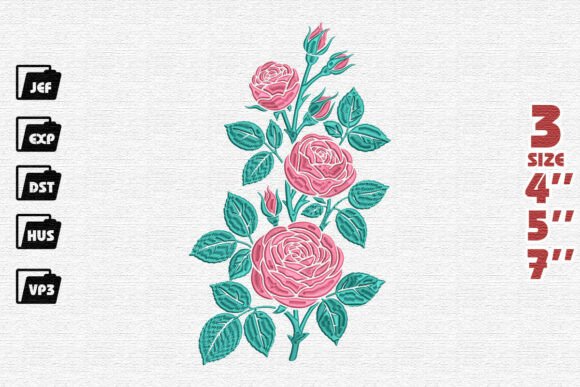
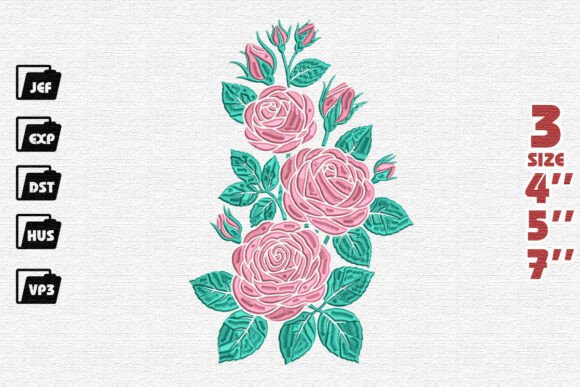
As an embroidery designer who’s stitched over 300 custom orders—from bridal handkerchiefs to boutique apron collections—I approached the Romantic Rose Stem Embroidery with quiet curiosity. Not hype, not urgency—just the instinct to assess whether this Single Flowers design would hold up in real-world production. Visually, it delivers immediately: a gracefully curving stem with three distinct blooms—two open roses and one tightly closed bud—plus delicate leaves and subtle thorn hints. It doesn’t shout; it invites. The line work feels intentional, not automated—the kind of flow you’d sketch by hand before digitizing. That mood matters: it suits romantic and vintage-inspired projects, yes—but more importantly, it reads as handmade, even at first glance.
How It Performs on Real Garments and Home Goods
I tested the Romantic Rose Stem Embroidery across five substrates: midweight cotton twill (for tote bags), French terry (sweatshirts), brushed poly-cotton (baby blankets), linen-blend tea towels, and structured cotton caps. Across all, the 5″ size struck the best balance—large enough to read clearly, small enough to hoop comfortably in standard 4×4 and 5×7 hoops. On sweatshirts, the stem’s gentle curve followed the fabric drape beautifully; no puckering or distortion. On caps, I used the 4″ version—tighter spacing kept details legible on the curved surface, though I did add light tear-away + cut-away stabilizer combo to prevent stitch migration.
The stitch density is moderate—not sparse, not overly heavy. That’s a win for frequent-wash items like kitchen towels and baby blankets. No dense fill-stitch flooding overwhelmed the petals; instead, layered satin stitches created soft dimension without stiffness. Running stitches define the stem and leaf veins cleanly, and the tiny buds held shape even on lightweight linen. That reliability extends to commercial embroidery: I ran 12 identical repeats on matching aprons for a café launch—zero thread breaks, no rehooping needed.
Where This Design Adds Quiet Value
For Etsy sellers and handmade shop owners, the Romantic Rose Stem Embroidery isn’t just decoration—it’s a subtle trust signal. Customers scrolling for personalized gifts pause longer on pieces that feel considered, not generic. A pillow cover with this design reads as heirloom-adjacent. A baby blanket with the 4″ version stitched in pale blush and sage thread? Instantly gift-ready. Even digital product sellers benefit: pairing the digital embroidery file with printable mockups (think soft-focus flat lays on vintage lace) elevates perceived value far beyond basic clipart-style florals.
Brand consistency is another quiet strength. Because the stem flows organically—not rigidly symmetrical—it adapts well to varied placements: off-center on a tote bag, vertically aligned on a towel hem, or mirrored across a double-breasted apron. That flexibility means fewer design iterations when scaling your catalog. And for craft fairs? It photographs exceptionally well—soft shadows under the petals, natural thread sheen—reducing post-editing time while increasing Instagram engagement.
Practical Notes Every Designer Should Check Before Stitching
- Always test on scrap fabric—especially with textured or stretchy materials. The rose’s fine petal edges respond noticeably to stabilizer choice.
- Review thread colors carefully. The original palette leans romantic (dusty pinks, olive greens), but swapping to navy + cream or charcoal + ivory shifts it toward modern cottagecore—great for broader audience appeal.
- Confirm hoop size compatibility. While the 4″ and 5″ versions fit most home machines, the 7″ version requires a 6×10 hoop minimum—and benefits from basting stitches to secure fabric movement during long runs.
- Compare light vs. dark fabric mockups. On black twill, I switched to matte rayon thread for subtlety; on ivory linen, glossy polyester enhanced petal definition. Small choices, big impact.
- Inspect small details after stitching: the bud’s center and leaf tips are delicate. If they vanish on your first run, slightly reduce top tension or increase underlay density.
- Verify licensing terms on the Creative Fabrica embroidery product page before selling finished items—especially if marketing as “commercial use” or bundling into kits.
Fitting Naturally Into Your Creative Workflow
This isn’t a flashy, trend-chasing design. The Romantic Rose Stem Embroidery works because it’s quietly versatile. It anchors a minimalist sweatshirt embroidery without overwhelming it. It softens the structure of a cap without looking fussy. As an applique design base, its clean outer edge makes raw-edge or fused applique effortless. For nursery decor, pair it with simple monograms—no competing motifs needed. And for seasonal handmade gifts? Stitch it onto muslin drawstring bags filled with lavender sachets or herbal tea blends. The floral motif feels intentional, not incidental.
It also integrates smoothly with other design assets. I’ve combined it with vintage script fonts for embroidered patch sets, overlaid it subtly on printable greeting cards, and scaled it down to 2.5″ for delicate sleeve accents on children’s dresses. Its rhythm—curved stem, clustered blooms, asymmetrical balance—makes it feel cohesive, not collaged.
Final Thoughts for Crafters and Creative Entrepreneurs
If you’re evaluating the Romantic Rose Stem Embroidery for your next batch of custom apparel, embroidered patches, or boutique merchandise, know this: it earns its place not through novelty, but through thoughtful execution. It respects fabric. It honors stitchcraft. And it gives your finished product a whisper of romance that customers describe as “feeling made just for them.” Whether you’re building an Etsy shop, prepping for a holiday craft fair, or expanding your commercial embroidery offerings, this Embroidery design delivers consistent, photogenic, wash-tested results—without demanding extra labor or specialty tools. It’s the kind of reliable, mood-rich machine embroidery design that becomes a quiet staple in your library—not a one-season flourish.