Purple Rose Bloom Embroidery
A Thoughtful First Impression for Real Projects
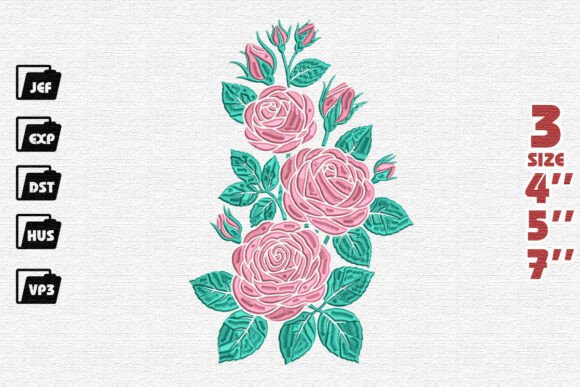
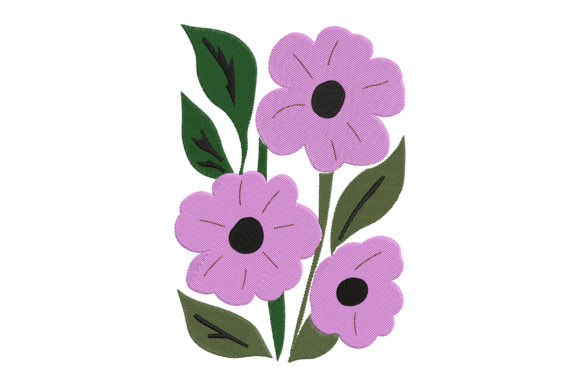
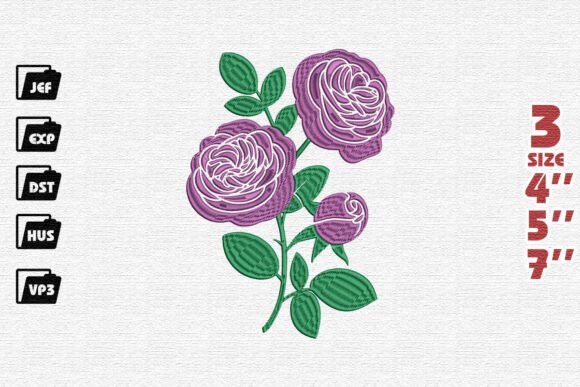
As an embroidery designer who’s stitched hundreds of floral motifs for Etsy shops, boutique apparel lines, and custom baby gifts, I opened Purple Rose Bloom Embroidery expecting charm—but what stood out immediately was its quiet confidence. This isn’t a fussy, over-layered bouquet. It’s two full purple rose blooms with soft petal definition, paired with one tightly closed bud—giving the design natural rhythm and visual balance. The composition leans into boldness without sacrificing elegance, making it feel equally at home on a linen pillow cover or a structured cotton tote bag. Its mood is romantic but grounded—ideal for handmade products where sophistication meets wearability.
Where Purple Rose Bloom Embroidery Fits Naturally
This machine embroidery design lives in that sweet spot between decorative impact and practical versatility. Because it’s offered in 4″, 5″, and 7″ sizes, it scales gracefully across applications: the 4″ version works beautifully on caps, baby blankets, and embroidered patches; the 5″ fits snugly on sweatshirt sleeves or apron pockets; and the 7″ makes a statement on pillow covers, kitchen towels, and nursery wall hangings. As a Creative Fabrica embroidery file from the Bouquets category, it avoids overly tight clusters or micro-details—so it doesn’t rely on perfect digitizing tricks to hold up. That’s reassuring when you’re stitching for real customers, not just mockups.
Performance Across Common Handmade Products
I tested Purple Rose Bloom Embroidery on several substrates common in small-batch production: midweight cotton twill (for tote bags), French terry (sweatshirts), brushed poly-cotton (baby blankets), and terry cloth (kitchen towels). On stable fabrics with proper cutaway stabilizer, the satin stitch petals held crisp edges and gentle dimension—no puckering, no thread breakage. On stretchy French terry, I added light tear-away + topping, and the fill stitch areas stayed smooth and even. The design’s moderate stitch density means it runs cleanly on most commercial and home embroidery machines—even older models—without overheating or stalling.
For curved surfaces like caps, I used the 4″ size with a cap frame and found the closed bud and outer petal curves digitized thoughtfully: no abrupt jumps or awkward pauses. On dark fabric, the contrast worked well with standard 40-weight rayon or polyester threads—no need for special metallics or variegateds unless you want intentional variation. And because the motif avoids tiny lettering or hair-thin stems, it holds up after repeated washing—critical for baby items, kitchen linens, and personalized gifts meant to last.
Impact on Your Handmade Brand & Customer Experience
When you choose Purple Rose Bloom Embroidery for a finished product, you’re not just adding decoration—you’re reinforcing trust. Customers browsing your Etsy shop or craft fair table respond intuitively to balanced, well-proportioned florals. This design reads as intentional, not generic. That translates directly to perceived value: a sweatshirt with Purple Rose Bloom Embroidery feels more curated than one with a cluttered, over-digitized rose. For boutique merchandise or nursery decor, it supports cohesive branding—especially if you pair it with coordinating solid-thread palettes (dusty lavender, sage, charcoal) across other pieces.
Photography benefits too. The clear negative space around the blooms lets your product shine—no busy background competition. And because the motif has natural focal points (the open blooms), it draws the eye in product listings and printable mockups without needing heavy filters or styling props. That’s a subtle but meaningful advantage for digital embroidery file sellers building design assets or creative entrepreneurs scaling handmade offerings.
Practical Notes Before You Stitch
- Always test on scrap fabric—especially when switching between hoop sizes or substrate types. The 7″ version may require rehooping on smaller frames.
- Review thread color contrast early. Purple tones vary widely across brands—swatch before committing to a full run.
- Check stitch density in the fill areas if using lightweight or sheer fabrics. A light tear-away stabilizer often suffices, but heavier fabrics benefit from medium cutaway.
- Confirm hoop size compatibility before starting. While the design is clean, the 7″ version may exceed standard 5×7 hoops depending on your machine’s actual stitching area.
- Compare light and dark fabric mockups side-by-side. The design’s structure holds up well, but petal shading may read differently on black vs. ivory.
- Inspect small details post-stitch—especially the bud’s center and petal tips—on your first run. A quick trim of stray threads maintains polish.
- Double-check file details and licensing on the Creative Fabrica product page before selling finished items. Licensing terms vary by seller, and clarity matters for commercial embroidery use.
Final Thoughts for Designers & Makers
Purple Rose Bloom Embroidery won’t replace every floral in your library—but it earns its place as a reliable, versatile, and quietly distinctive option. It’s the kind of digital embroidery file that supports both speed and care: efficient enough for batch production on tote bags or pillow covers, yet expressive enough to elevate a personalized gift or boutique merchandise line. If you’ve been searching for a floral motif that bridges classic appeal and modern wearability—without demanding excessive stabilizer, thread changes, or finicky hooping—this one delivers. It’s not flashy. It’s thoughtful. And in handmade business, that’s often exactly what sells.