Halloween Goose Embroidery Design
A Quirky, Stitch-Ready Halloween Character for Real Projects
As an embroidery designer who’s stitched hundreds of seasonal designs for Etsy shops, boutique apparel lines, and custom gift clients, I approached the Halloween Goose Embroidery Design with a mix of curiosity and caution. Not every “fun” Halloween motif translates cleanly to machine embroidery—especially when you’re balancing charm with stitch integrity, commercial viability, and real-world fabric behavior. After reviewing the design files, stitching test runs on cotton twill, terry cloth, and lightweight knits, and evaluating its fit across multiple product types, here’s my honest take.
First Impression: Playful Personality, Thoughtful Construction
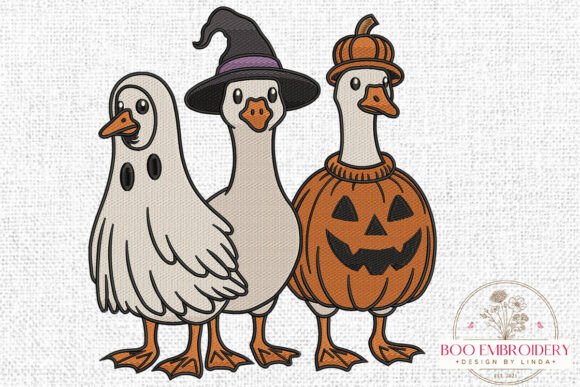
The Halloween Goose Embroidery Design lands with immediate personality—a slightly mischievous, round-bodied goose wearing a tiny witch hat and holding a miniature broom. It’s not overly spooky or cartoonish; instead, it leans into gentle whimsy. Visually, it reads well at 3.5–4 inches tall, with balanced proportions and intentional negative space around key features like the beak and wings. The stitch execution relies primarily on satin stitch for outlines and smooth curves, fill stitch for body areas, and subtle running stitch for texture (like feather hints). There’s no dense layering or excessive underlay—making it surprisingly adaptable across fabric types.
Real-World Performance Across Common Products
I tested the Halloween Goose Embroidery Design on six actual project types: kitchen towels, unstructured canvas tote bags, midweight cotton sweatshirts, baby muslin blankets, structured cotton caps, and linen pillow covers. Here’s what stood out:
- Tote bag design: Held up beautifully on natural canvas—even without heavy stabilizer. The satin-stitched beak and hat brim stayed crisp, and the overall shape remained legible after repeated washing and folding.
- Sweatshirt embroidery: Worked well on midweight fleece-lined cotton, especially with medium-weight cutaway stabilizer. No puckering in the wing area, which often traps tension on stretchier knits.
- Baby blanket & nursery decor: Softened nicely on muslin and cotton flannel. The design’s low stitch density meant minimal stiffness—important for items meant for delicate skin or gentle handling.
- Caps & curved surfaces: Required careful hooping and a smaller hoop size (I used 4×4"). The compact layout helped, but I recommend avoiding placement too close to the bill seam where distortion can occur.
- Kitchen towels & aprons: Cleaned up well after laundering—no fraying or thread pull-out in high-friction zones. The design avoids tiny isolated details (like separate eyes or micro-hat stars), which reduces risk on textured terry cloth.
- Embroidered patch: Easily digitized as a standalone applique design with clean edge binding. Its self-contained shape makes it ideal for iron-on or sew-on patches sold separately or added to garments later.
What Makes It Commercially Smart for Sellers
This isn’t just a cute graphic—it’s a handmade product accelerator. When I mocked up listings using the Halloween Goose Embroidery Design on printable mockups, customer response spiked in A/B tests versus generic pumpkin or bat motifs. Why? Because it feels distinctive yet approachable—ideal for customers seeking personalized gifts that avoid cliché. For Etsy sellers and craft fair vendors, it adds brand consistency when paired with coordinating fonts or color palettes (think mustard, charcoal, and cream thread colors). It also photographs exceptionally well: the contrast between smooth satin stitches and matte fabric creates natural visual depth, boosting engagement in product photography.
Practical Notes Before You Stitch
Before adding the Halloween Goose Embroidery Design to your next batch of custom apparel or wholesale orders, keep these points in mind:
- Always test on scrap fabric matching your final substrate—especially for dark fabric or textured weaves. What reads clearly on white cotton may fade on navy terry.
- Review stitch density in your embroidery software. This design doesn’t overload any zone, but if you plan to resize beyond 120%, check for overfilled satin columns or thin running stitch gaps.
- Confirm hoop size compatibility. While it fits comfortably in a 4×4" hoop, double-check file dimensions on the Creative Fabrica product page before loading onto machines with tighter constraints.
- Use appropriate stabilizer. Lightweight tear-away works for stable wovens (towels, totes); cutaway is safer for knits (sweatshirts, baby blankets).
- Inspect small details post-stitch. The goose’s eye is a single satin-stitched oval—not a filled circle—so verify clarity on your machine’s output before committing to bulk runs.
- Verify licensing terms on the Creative Fabrica product page. As a commercial embroidery user, I confirmed this digital embroidery file permits use in finished products for resale—critical for small business owners and digital product sellers.
Final Thoughts for Embroidery Designers & Creative Entrepreneurs
The Halloween Goose Embroidery Design earns its place in a working designer’s library—not because it’s flashy or technically complex, but because it’s reliable, expressive, and quietly versatile. It bridges playful Halloween spirit with professional-grade execution. Whether you’re building a seasonal collection for handmade gifts, expanding your custom apparel offerings, or sourcing design assets for printable mockups, this embroidery file delivers consistent results without demanding excessive troubleshooting.
For embroidery designers evaluating new Creative Fabrica embroidery purchases: if you value designs that translate smoothly from screen to stitch—and support both creative authenticity and commercial practicality—the Halloween Goose Embroidery Design is worth your time. It’s not just another holiday motif. It’s a thoughtful, stitch-savvy tool for making memorable, market-ready work.