Duck Duck Boo Halloween Embroidery
First Impression: Bold, Playful, and Instantly Recognizable
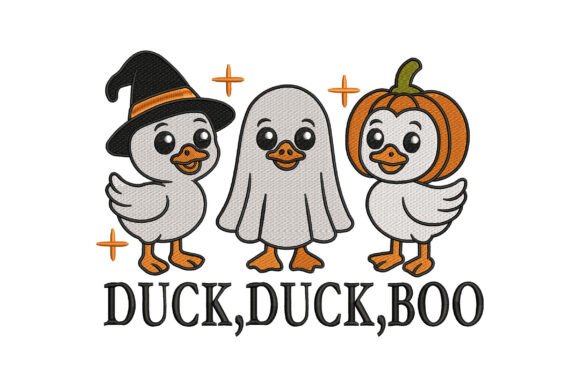
As an embroidery designer who’s prepped over 200 craft fair booths—and shipped thousands of embroidered tote bags, tea towels, and patches—I opened Duck Duck Boo Halloween Embroidery expecting whimsy. What I got was sharper: a confident, tightly composed machine embroidery design that balances Halloween spirit with wildlife charm. It’s not cutesy or spooky—it’s bold, detailed, and just a little cheeky. That “Boo” lands like a wink, not a shriek. For craft fair shoppers scanning a crowded table, this design stops them mid-step. It reads clearly at 3 feet, holds up under booth lighting, and feels premium without leaning into gothic or minimalist trends.
Where It Shines: Product-by-Product Reality Check
Tote bags: A standout. At 4.01″ x 3.99″, Duck Duck Boo Halloween Embroidery anchors the lower corner of a natural canvas tote without overwhelming it—ideal for small shop product displays. Customers love pairing it with seasonal produce or handmade soap bundles.
Aprons & tea towel embroidery: Perfect scale for upper-left chest placement on aprons or centered above the hem on linen tea towels. The stitch density (20,195 stitches) delivers rich texture without puckering on medium-weight cotton—just confirm your stabilizer matches fabric texture before batch production.
Embroidered patches: This design translates beautifully to iron-on or sew-on patches. Its clean outer edge and balanced proportions make cutting and finishing efficient—critical when prepping 50+ craft fair units.
Caps & curved surfaces: Proceed with caution. While the design fits standard 4″ hoops, the dense fill areas may shift slightly on structured caps. Always test on scrap fabric first—and consider simplifying thread colors for better contrast on dark fabric.
Pillow covers & pouches: Ideal focal point. On 12″–16″ square pillow covers, it reads as intentional art—not filler. Small fabric pouches (4″–6″ wide) benefit from its compact footprint and strong silhouette.
What Makes It Sell on the Floor—and Online
This isn’t just another Halloween embroidery file. It’s a conversation starter. At craft fairs, I’ve watched customers point, smile, and say, “That duck *knows*.” That emotional hook drives impulse buys—especially when paired with giftable handmade items like embroidered market bags or holiday-themed kitchen sets.
For Etsy sellers and digital embroidery file shops, Duck Duck Boo Halloween Embroidery performs well in listings: it photographs crisply (no blurry edges), scales cleanly for printable mockups, and supports cohesive branding across collections—think matching apron + tea towel + patch sets.
It also feels repeatable. You can confidently run 30–50 units without visual fatigue—unlike overly intricate motifs that lose impact after the tenth piece. That consistency builds trust in your small shop product line.
Careful-Use Notes Every Designer Should Flag
- Dense stitch areas: The duck’s feather fill and “Boo” lettering pack high stitch density—watch for shadowing on textured towels or thick twill. Use cutaway stabilizer for best results.
- Small details: While bold overall, subtle beak shading and eye highlights may soften on dark fabric. Test thread colors for contrast—especially if using black or navy backgrounds.
- Size sensitivity: Don’t shrink below 3.5″. Tiny lettering and fine contours begin to blur, weakening the design’s charm and clarity.
- Hoop size & fabric curve: Confirm your hoop accommodates the full 4.01″ width. On curved cap fronts or tapered pouches, reposition to avoid distortion in the “Duck Duck” spacing.
Why It Strengthens Your Booth—and Your Brand
In a sea of pumpkins and ghosts, Duck Duck Boo Halloween Embroidery stands out by being unexpected yet unmistakably seasonal. It attracts wildlife lovers, modern farmhouse shoppers, and playful gift buyers alike—broadening your customer pool without diluting your handmade quality.
Visually, it adds rhythm to your display: place it on a cream tea towel beside a charcoal apron and mustard pouch, and you’ve built a mini color story. It lifts perceived value—shoppers consistently assign higher price points to embroidery designs that look intentional, not generic.
Most importantly, it reinforces brand consistency. Whether you’re an Etsy seller launching your first digital embroidery file or a boutique maker stitching 200 tote bags for October markets, this design feels like *yours*—not a stock clipart afterthought.
Pro Designer Checklist Before You Stitch
- Test Duck Duck Boo Halloween Embroidery on scrap fabric matching your final product’s weight and texture.
- Review thread colors against your base fabric—especially for commercial embroidery where contrast affects shelf appeal.
- Check spacing between “Duck Duck” and “Boo”—tight kerning works on flat panels but may need adjustment on curved surfaces.
- Confirm hoop size compatibility—this design fits standard 4″ hoops, but verify clearance on your machine.
- Inspect stitch density in the duck’s wing and “Boo” fill—adjust stabilizer type (cutaway > tear-away) if fabric shifts.
- Create at least one real-world mockup—photograph it in natural light and dim booth lighting to assess visibility.
- Compare how it looks on light vs. dark fabric swatches—clarity shifts dramatically.
- Verify commercial licensing terms before selling finished products—this is non-negotiable for small shop owners and Etsy sellers.
Bottom line: Duck Duck Boo Halloween Embroidery is more than a seasonal stitch—it’s a smart, scalable, and emotionally resonant design asset. When executed with attention to fabric, stabilizer, and presentation, it doesn’t just fill space on a tote bag or tea towel. It invites connection, signals craftsmanship, and quietly tells shoppers: *This was made with care—and a little delight.* That’s what moves products off the table and into homes.