Cute Bumblebee Embroidery
First Impression: Minimalist Charm with Instant Appeal
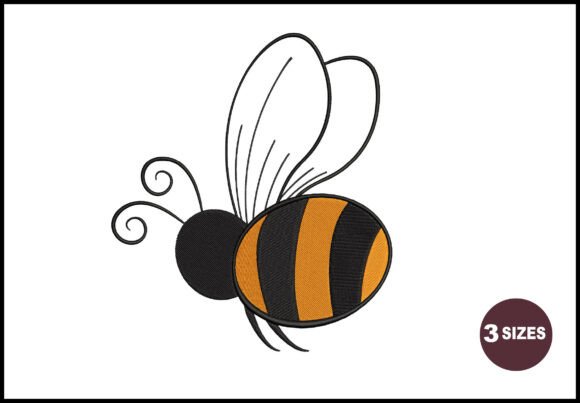
As an embroidery designer who’s prepped over 200 craft fair booths, I’ll say it straight: Cute Bumblebee Embroidery lands exactly where it needs to — soft, friendly, and effortlessly memorable. It’s not loud or cartoonish; it’s a quiet nod to nature with clean lines and intentional simplicity. That “minimalist yet charming” description? It’s accurate. This isn’t a hyper-detailed insect study — it’s a bee that breathes warmth, making it ideal for handmade product lines that balance authenticity with approachability. Customers at craft fairs respond to designs that feel personal but polished, and this one delivers that in spades.
Where It Shines: Real-World Craft Fair Product Pairings
In my booth setup — think woven market bags, linen aprons, striped tea towels, and cotton canvas totes — Cute Bumblebee Embroidery performs strongest when used as a subtle signature accent. On a natural-toned tote bag, it reads as thoughtful and handmade, not mass-produced. As apron embroidery, placed just above the pocket or centered on the bib, it adds personality without overwhelming function. For tea towel embroidery, it holds up beautifully on medium-weight cotton — especially when stitched with high-contrast thread (think mustard yellow on oatmeal or charcoal on cream).
It also works brilliantly as an embroidered patch: small enough to fit on denim jackets or kids’ backpacks, yet distinct enough to spark conversation. On fabric pouches and pillow covers, it scales well — not too busy, not too sparse. And yes, it even translates to caps, though I recommend placing it on the front panel (not curved brim) and using lightweight stabilizer to avoid puckering.
What Makes It Sell: Visual Clarity & Emotional Resonance
This is where Cute Bumblebee Embroidery stands out from generic bug-themed designs. At a glance, it reads as *bee* — no squinting, no guessing. That immediate recognition matters when shoppers walk past your booth in under three seconds. It feels handmade without looking amateurish, elevating even simple items like dish cloths or drawstring bags into intentional small shop products.
Photographically, it’s Etsy-friendly: clean edges, balanced negative space, and a shape that crops well for thumbnails. Whether you’re creating a printable mockup for your listings or staging a real-life booth display, this design keeps focus on the product — not the clutter. Its versatility across categories (tote bag design, garden decor, children’s wear) means you can build cohesive collections without repeating motifs.
Production Practicality: Batch-Friendly & Booth-Ready
From a production standpoint, Cute Bumblebee Embroidery is a dream for batch work. It’s not overly dense — meaning less thread breakage, faster run times, and lower wear on machines. There’s no tiny lettering or micro-detailing that demands re-hooping or magnification. As a machine embroidery design, it’s forgiving on varied hoop sizes and stable across common stabilizer types (cutaway for knits, tear-away for wovens).
That said — always test first. Run it on scrap fabric matching your final product: a textured terry towel behaves differently than smooth quilting cotton. Check thread contrast against your base fabric — dark thread on black fabric may vanish; light thread on pale linen might lack definition. Confirm spacing around the bee’s wings and body — tight curves need proper stitch density to avoid gaps or distortion.
Careful-Use Notes: Protect Your Quality & Consistency
- Dense stitch areas: If the design includes filled wings or a shaded body, verify stitch density doesn’t overwhelm lightweight fabrics or cause stiffness on children’s clothes.
- Tiny details: While minimalist, any antennae or wing veining should remain legible at 2.5"–3" width — test at your smallest intended size.
- Curved surfaces: Avoid placing Cute Bumblebee Embroidery near seams or crowns on caps unless your digitizing supports contour compensation.
- Dark or textured fabric: On heavy terry or dark indigo, consider adding a light underlay or switching to matte thread for better definition.
- Small-scale use: Below 1.75", simplify or omit fine interior lines — clarity trumps detail at tiny sizes.
Design Impact: Beyond Aesthetics — It Builds Your Brand
This isn’t just a bee — it’s a brand signal. When repeated across your handmade product line, Cute Bumblebee Embroidery quietly communicates care, consistency, and craft. Buyers notice that cohesion: same bee on your tote, same bee on your tea towel tag, same bee on your Instagram story banner. That repetition builds recognition — especially important for Etsy sellers and boutique makers competing in saturated markets.
In person, it draws attention without shouting. At craft fairs, it invites touch — people lean in to trace the wing stitching, comment on its sweetness, ask if it’s for a garden lover or a new parent. That engagement is gold. It also lifts perceived value: a $24 tote feels like a considered gift when finished with precise, joyful embroidery file work.
Final Designer Checklist Before You Stitch
- Test the digital embroidery file on scrap fabric matching your final product’s weight and texture.
- Confirm thread colors complement your fabric palette — avoid relying solely on screen previews.
- Review spacing and proportions — does the bee sit comfortably within your chosen hoop size?
- Inspect stitch density: is it balanced for your fabric type and intended use?
- Choose the right stabilizer — lightweight for silks, firm cutaway for stretchy knits.
- Create at least one real mockup — not just a digital render — to assess scale and impact in natural light.
- Compare how it looks on multiple fabric colors — contrast changes everything.
- Verify commercial licensing terms before selling finished products — especially for wholesale or third-party platforms.
Cute Bumblebee Embroidery isn’t just another bug motif. It’s a smart, scalable, emotionally resonant asset for craft fair product development — one that supports both your creative voice and your bottom line. Done right, it becomes a quiet ambassador for your shop: memorable, trustworthy, and unmistakably handmade.