Whimsical Blue Baby Footprints Outline Embroidery Design
First Impression: Soft, Sweet, and Instantly Recognizable
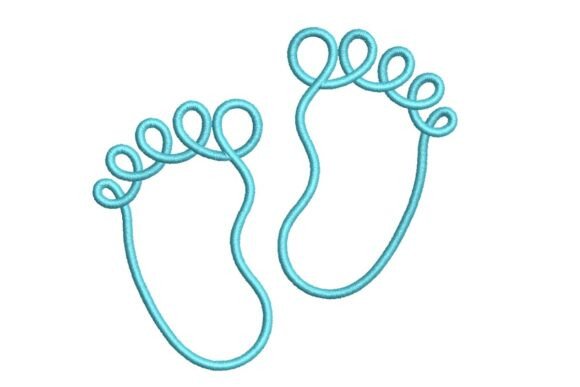
As an embroidery designer who’s prepped over 200 craft fair booths—from snowy Midwest markets to sun-drenched California pop-ups—I know what stops a shopper mid-aisle. The Whimsical Blue Baby Footprints Outline Embroidery Design lands with gentle confidence: not loud, not fussy, but undeniably sweet. It reads as soft, minimal, and delicately modern—perfect for the Nursery category without leaning into cliché. That light blue outline? It whispers “new life,” “tenderness,” and “handmade care” all at once. No florals, no script, no clutter—just two stylized footprints with playful curly toes. That whimsy isn’t childish; it’s emotionally intelligent design.
Where It Shines in Your Craft Fair Lineup
This machine embroidery design thrives where subtlety meets sentiment. On a natural linen tote bag design, it sits beautifully centered near the bottom hem—small enough to feel intentional, large enough to read from three feet away. As apron embroidery, it works best on the left chest or pocket flap: a quiet signature that signals craftsmanship, not branding. For tea towel embroidery, place it just above the hem on a folded edge—it gains presence against the kitchen’s functional backdrop. And as an embroidered patch, it’s gold: iron-on or sew-on, it transforms plain denim jackets, baby blankets, or keepsake pouches into heirloom-ready handmade products.
It also excels on curved surfaces—yes, even caps. Because it’s outline-based (no dense fill), it adapts gracefully to the crown’s contour when hooped correctly. On small fabric pouches or pillow covers? It’s ideal at 2.5–3 inches wide—large enough to hold detail, small enough to preserve the delicate line work. As a craft fair product, it doesn’t shout—but it lingers. Parents, grandparents, and gift-givers pause, smile, and reach out. That’s your opening.
What Makes It Sell—Beyond Cuteness
Sales don’t hinge on charm alone. This digital embroidery file delivers real-world advantages: high scannability (shoppers grasp its meaning in under two seconds), strong visual rhythm (the twin footprints create balance), and effortless scalability. It photographs exceptionally well—especially on light fabrics—making your Etsy seller listings and printable mockups pop without heavy editing. And because it’s low-stitch-density and outline-driven, it’s fast to run, thread-efficient, and forgiving across batch production. You can embroider 12 tea towels in under an hour without rethreading or stabilizer adjustments.
That efficiency supports brand consistency too. Whether you’re stitching it on market bags, baby onesies, or boutique gift tags, the design feels cohesive—not like a collection of random motifs, but part of a thoughtful small shop product line. It elevates perceived value: customers see handmade quality in the clean line work, not just the fabric choice.
Careful-Use Notes: Protect the Delicacy
- Avoid dense stitch areas: This is an outline-only design—no fills mean no risk of puckering, but also no hiding power. Don’t force it onto thick, stiff fabrics like canvas tote exteriors without testing.
- Beware textured towels: Waffle-weave or heavily terry-knit tea towels can blur those curly toes. Stick to smooth cotton or linen blends for clarity.
- Dark fabric needs contrast: Light blue thread on navy or charcoal will fade visually. Swap to white, pale grey, or mint for legibility—or confirm your thread colors match your base fabric before bulk runs.
- Small sizes demand caution: Below 1.75 inches wide, the curly toe details soften. Use it as a focal accent—not a tiny border motif—on baby caps or bibs.
- Curved surfaces need stabilization: For caps or rounded pouches, use cutaway + tear-away combo stabilizer. Outline designs show every wobble on curves.
Real Designer Prep Checklist
Before your booth opens, do this—not later:
- Test the Whimsical Blue Baby Footprints Outline Embroidery Design on scrap fabric matching your final product (e.g., unbleached linen for tea towels, twill for aprons).
- Check thread contrast in natural light—not just under your machine lamp.
- Review spacing: Does it sit comfortably within your chosen hoop size? Outline designs often need less real estate, but confirm clearance around curves.
- Inspect stitch density: Even outlines can bunch if digitized poorly. Look for smooth arcs, no skipped jumps or jagged corners.
- Use the right stabilizer—especially for lightweight fabrics. A single layer of medium-weight cutaway prevents shifting without adding bulk.
- Create at least one real mockup: Stitch it, press it, photograph it on your actual tote or pillow cover. Does it look handmade—or mass-produced?
- Compare fabric colors side-by-side: Light blue thread sings on oatmeal, whisper-soft on slate, and disappears on dusty teal. Adjust accordingly.
- Confirm commercial licensing: If you’re selling finished products (not just the embroidery file), verify your license permits resale of physical goods.
Final Thought: A Quiet Anchor in a Busy Booth
In a sea of bold typography, glittery florals, and maximalist patterns, the Whimsical Blue Baby Footprints Outline Embroidery Design is your quiet anchor. It doesn’t compete—it connects. It draws in the customer who values intention over intensity, softness over saturation, and meaning over mass appeal. For commercial embroidery sellers, Etsy artisans, and boutique makers building emotional resonance, this isn’t just another design asset. It’s a story told in thread—and one that sells itself, softly, every time.