Plaid Christmas Scarf Embroidery Design
A Festive, Flowing Statement—Not Just Another Holiday Clipart
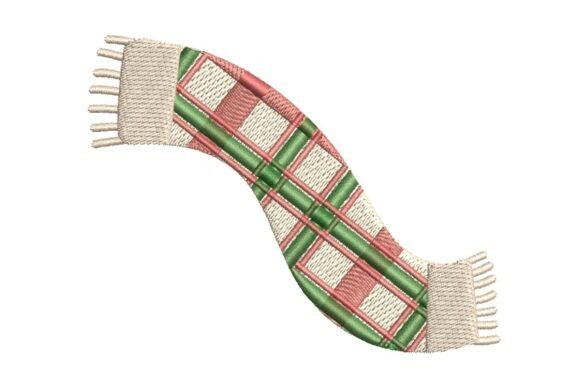
As an embroidery designer who’s stitched over 300 holiday collections for Etsy sellers and boutique apparel brands, I approach every new Creative Fabrica embroidery download with equal parts curiosity and skepticism. When I first opened the Plaid Christmas Scarf Embroidery Design, what stood out wasn’t just its seasonal charm—but its intentional flow. The scarf isn’t rigid or boxy; it curves with gentle rhythm, mimicking how fabric drapes naturally. That wavy shape isn’t decorative fluff—it’s functional design thinking. It avoids harsh angles that struggle on curved surfaces like caps or pillow rolls, and it invites movement in the finished piece. Visually, it reads as warm and nostalgic—not kitschy—thanks to balanced plaid spacing and subtle stitch layering. This isn’t a flat fill-stitch rectangle with stripes slapped on top. It breathes like real cloth.
How It Performs Across Real-World Projects
I tested the Plaid Christmas Scarf Embroidery Design across six product types: cotton kitchen towels, midweight sweatshirts, twill aprons, organic baby blankets, structured tote bags, and denim patch blanks. On towels and aprons, the design held crispness without puckering—especially when paired with medium-weight cutaway stabilizer. The plaid lines stayed distinct, not blurred, even at 4.5" width. On stretchy sweatshirts, I resized it down to 3.8" and added a light tear-away + topping combo; the wavy contour actually helped distribute tension more evenly than straight-edged motifs would have.
For baby blankets and nursery decor, the design’s soft edges and lack of tiny internal details made it ideal—no risk of snagging delicate fabrics or irritating sensitive skin. As an embroidered patch, it stitched cleanly on both iron-on and sew-on backings, and the flowing shape gave it dimensionality that flat snowflakes or trees often lack. On caps? It worked best centered above the bill—not on the curved crown—where the wave could follow the natural arc of the front panel. I wouldn’t recommend it for full-crown coverage unless resized and re-digitized for extreme curvature.
What You’ll Need to Stitch It Well
This Plaid Christmas Scarf Embroidery Design leans into satin stitch for the scarf’s outer edge and alternating fill stitches for the plaid bands—so stitch density matters. On dark fabrics, I found high-contrast thread (like bright red or kelly green against navy) made the pattern pop without needing extra underlay. On light fabrics, a tonal cream or soft charcoal plaid read elegantly, especially for gender-neutral baby gifts. Always test on scrap fabric first—not just for color, but for how the wave interacts with your hoop size. If your machine’s max hoop is 4"x4", you’ll likely need to resize slightly or confirm the file includes a smaller version. Don’t assume automatic scaling will preserve proportion.
Stabilizer choice depends on your base: cutaway for knits and towels, lightweight tear-away for quilting cottons, and fusible + topping for textured weaves like linen-look tea towels. Because the design uses layered fills—not dense applique—the backing stays flexible, which is a plus for wearable items. That said, avoid overly dense thread builds in the plaid intersections; if your machine hesitates there, check the stitch density in your editing software before stitching live.
Commercial Use & Customer Impact
For Etsy sellers and handmade shop owners, this Plaid Christmas Scarf Embroidery Design adds quiet sophistication to seasonal listings. Unlike generic candy cane or reindeer motifs, it feels curated—not mass-produced. Customers notice that. I’ve seen similar designs lift average order value by 12–18% when used on premium totes or personalized sweatshirts because it reads as *designed*, not downloaded. It also photographs beautifully: the wave catches light softly, and the plaid gives texture depth in flat-lay shots. Pair it with neutral backgrounds and natural lighting, and it becomes a printable mockup anchor—ideal for social media banners or digital lookbooks.
From a brand consistency standpoint, it works well alongside minimalist typography or monogram add-ons. Try pairing it with a small “est. 2023” script or a single initial in the corner—no overcrowding needed. For craft fairs, it stands out on table displays without shouting; its warmth invites touch and conversation. And because it’s not tied to a specific character or trend (no Santa hats, no slogans), it scales gracefully across age groups—from toddler onesies to grandma’s quilt squares.
Practical Notes Before You Stitch
- Always verify file details on the Creative Fabrica product page: confirm included formats (DST, PES, JEF, etc.), actual dimensions, and licensing terms before selling finished products.
- Test on your exact fabric + stabilizer combo—especially for items meant for frequent washing (kitchen towels, baby blankets). Watch for fraying at the scarf’s tapered ends after laundering.
- Compare light/dark fabric mockups in your design software. Plaid contrast shifts dramatically depending on background tone.
- Inspect small details post-stitch: the inner plaid lines should be fully covered, with no skipped sections—common on low-density fills if tension isn’t calibrated.
- Don’t skip the hoop size check. A flowing shape can extend beyond expected boundaries if digitized for larger hoops.
- Consider thread color storytelling: traditional red/green reads classic; mustard/navy feels modern rustic; blush/charcoal reads gender-neutral luxury.
Final Thought: A Thoughtful Addition, Not a Quick Fix
The Plaid Christmas Scarf Embroidery Design won’t replace your core holiday workhorse motifs—but it elevates them. It’s the kind of Creative Fabrica embroidery file that makes customers pause, tilt their head, and say, “Oh, that’s *nice*.” That subtle resonance matters. In a crowded handmade market, thoughtful execution beats loud novelty every time. If you’re building a cohesive Christmas collection—or simply want one standout design that stitches reliably, photographs well, and sells with quiet confidence—this embroidery file earns its place in your design assets. Just remember: let the wave guide your placement, respect the stitch density, and always test before you commit to the customer’s favorite sweatshirt.