Mystical All-Seeing Eye Embroidery Design
First Impression: Bold, Mystical, and Instantly Memorable
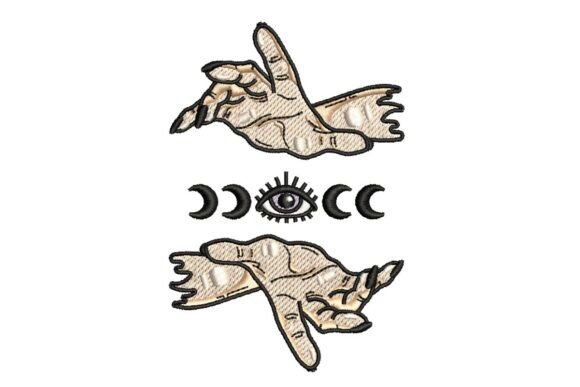
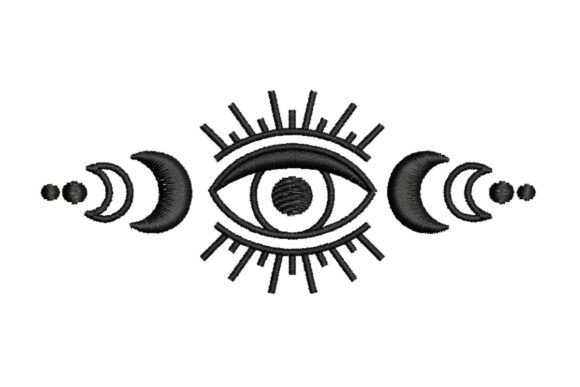
As an embroidery designer who’s prepped over 200 craft fair booths in the past decade, I can tell you this at a glance: Mystical All-Seeing Eye with Moon Phases Embroidery Design lands as bold—not cute, not rustic, not minimalist—but deeply evocative. It reads as modern mysticism meets celestial storytelling. That stylized central eye, radiating sun-like rays and framed by moon phases, triggers curiosity before customers even step up to your table. It fits seamlessly into the Fairy Tales category because it whispers myth, intuition, and quiet power—not fantasy dragons or princess gowns, but the kind of timeless symbolism that draws teens, witches, therapists, tarot readers, and spiritual creatives alike.
Where It Shines on Craft Fair Products
This machine embroidery design thrives where presence matters. On a heavyweight canvas tote bag? Absolutely—it anchors the front with gravitas and becomes a conversation starter. As apron embroidery for herbalists or ceramicists? Yes—centered above the pocket, it signals intention and artistry. For tea towel embroidery, keep it scaled to 3.5–4 inches wide; the moon phases retain clarity against linen’s subtle texture, and the eye stays legible even after repeated washing.
Embroidered patches are where this design truly sings. Its balanced composition—eye center, symmetrical rays, flanking crescents—translates cleanly into a 2.75-inch circular or oval patch. Customers love pinning these to denim jackets or backpacks, and they photograph beautifully for Etsy seller listings. On small fabric pouches or pillow covers? Scale down carefully—below 2.25 inches, the inner eye detail risks blurring, especially with dense stitch density. Avoid using it as a tiny accent on cap brims or curved surfaces unless you’ve tested hoop placement and stabilizer support thoroughly.
What Makes It Sell on the Floor—and Online
At a crowded handmade market, Mystical All-Seeing Eye with Moon Phases Embroidery Design cuts through visual noise. It’s not generic florals or trendy slogans—it’s ownable, story-rich, and emotionally resonant. Buyers linger. They ask, “What does it mean?” That’s your opening to connect—and to upsell. Pair it with a small card explaining moon phase symbolism (new, waxing, full, waning) and you’ve elevated a small shop product into a meaningful handmade product.
For printable mockups and digital listings, this design photographs exceptionally well. The contrast between eye, rays, and moons creates natural depth—even on flat-lay shots. Use neutral backdrops (oatmeal linen, charcoal wool) to let the thread colors pop. Just avoid oversaturating edits; authenticity sells better than gloss.
Production Realities: Know Before You Hoop
Don’t assume this design stitches flawlessly out of the box. Here’s what I check every time:
- Stabilizer is non-negotiable—especially for textured towels or thick twill aprons. Use cutaway + tear-away combo for clean ray definition.
- Fabric texture matters. On terry cloth or heavy burlap, reduce stitch density slightly or risk thread nesting. Test first.
- Dark fabric demands high-contrast thread. If stitching on navy or black canvas, use bright gold, ivory, or metallic silver—not beige or light gray.
- Hoop size must accommodate the full outer radius of the sun rays. Skimp here, and you’ll get distortion at the edges.
- Small lettering isn’t part of this design—a relief—but those delicate moon phase curves need smooth satin-stitch transitions. Review the embroidery file closely for jump stitches near crescent tips.
Booth Strategy & Brand Alignment
In my booth, I group Mystical All-Seeing Eye with Moon Phases Embroidery Design items together—not scattered. A folded tea towel, a mini pouch, a patch on a denim sleeve, and a pillow cover stacked beside a small framed print create a cohesive vignette. This reinforces brand consistency and tells a visual story: “This is our celestial line.” It also boosts perceived value—customers see range, not repetition.
It strengthens booth display strength because it’s versatile yet unmistakably unified. No need for signage screaming “Mystic!”—the design communicates its theme instantly. And yes, it drives buyer engagement: people touch the ray textures, compare moon phases across products, and often buy multiples (“I’ll take the patch and the pouch”).
Designer-to-Designer Notes Before You Produce
Before cutting your first production run:
- Test the digital embroidery file on scrap fabric matching your final product—same weight, same weave.
- Check thread contrast under both daylight and warm booth lighting.
- Review spacing between rays and moon outlines—tight gaps may fill in with dense stitching.
- Create at least one real-world finished product mockup (not just digital). Hold it in hand. Walk around your space with it. Does it feel premium? Does the eye draw the eye?
- Compare how it looks on light vs. dark fabric swatches—some color combos mute the mysticism.
- Confirm commercial embroidery rights. If selling finished goods, ensure your license covers resale—not just personal use.
The Bottom Line for Creative Entrepreneurs
Mystical All-Seeing Eye with Moon Phases Embroidery Design isn’t just another embroidery file—it’s a mood, a movement, and a magnet. It works hard across craft fair product categories without losing identity. It invites storytelling, supports premium pricing, and performs reliably—if you honor its structure and test intentionally. For Etsy sellers, boutique makers, and small batch producers, it’s a rare find: spiritually rich, visually confident, and commercially smart. Just remember: mysticism sells best when the stitch is solid, the contrast is clear, and the story feels true.