Girl Monster Bow Embroidery Design
A Craft Fair Designer’s Real-World Review Before Booth Day
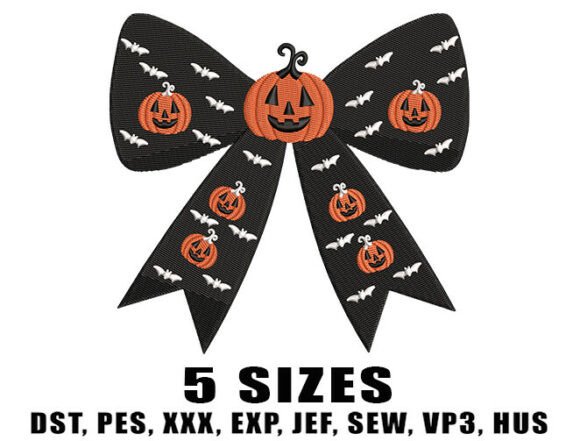
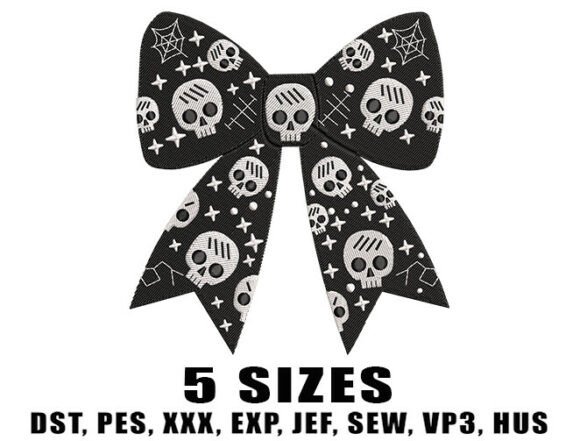
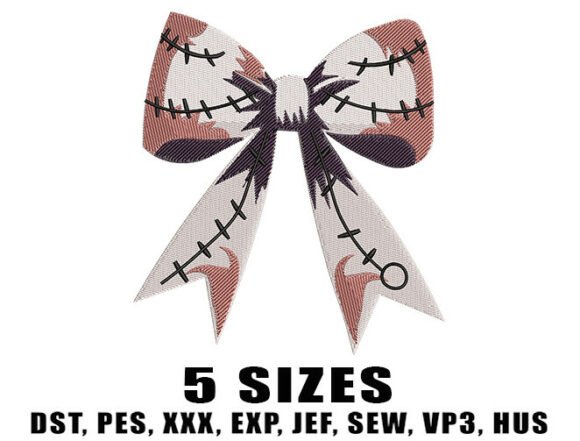
As an embroidery designer who’s packed, stitched, and sold at over 40 craft fairs—from tiny downtown pop-ups to regional Halloween markets—I approach every new machine embroidery design with two questions: Will it stop someone mid-aisle? and Can I produce it consistently without sacrificing quality or sanity? The Girl Monster Bow Embroidery Design lands squarely in the “yes, if handled right” category. Its title alone—Stitched Gothic Bow Creepy-cute stitched bow with spooky patchwork—tells me this isn’t just another black cat or pumpkin motif. It’s got attitude, contrast, and narrative. First impression? Bold, modern, and unapologetically playful—leaning into that coveted “spooky-but-sweet” aesthetic that sells like wildfire in October.
Where This Design Shines on Craft Fair Products
The Girl Monster Bow Embroidery Design thrives where personality meets practicality. On a heavyweight canvas tote bag? Perfect—especially at Sizes 4 (6.8") or 5 (7.8"). It reads clearly from six feet away, balances well near the bottom corner or centered on the front panel, and gives your booth instant visual cohesion when paired with other gothic-cute items. As apron embroidery, Size 3 (5.8") works beautifully above the pocket—large enough to read, small enough to avoid overwhelming the bib. For tea towel embroidery, I’d lean toward Size 2 (4.8") placed top-center; the “patchwork” element adds dimension against linen’s natural texture without competing.
It’s also a standout as an embroidered patch. Stitched cleanly onto twill or denim, the Girl Monster Bow Embroidery Design becomes a collectible—ideal for pin boards, jacket sleeves, or gift-ready pouches. On fabric pouches (think drawstring velvet or corduroy), Size 1 (3.8") keeps proportions tight and premium. Pillow covers? Size 3 or 4 anchors the corner with charm and contrast. And yes—it absolutely belongs on a structured cap, but only at Size 2 or smaller. Anything larger risks distortion on the curved crown surface.
What Makes It Sell—And What Requires Caution
This design earns attention because it’s instantly legible. No decoding needed. The bow shape is familiar; the “monster” twist is delightful—not grotesque, not vague. That clarity translates directly to booth impact: shoppers glance, grin, and reach. It photographs exceptionally well for Etsy listings and printable mockups, especially against muted backgrounds (cream, charcoal, deep burgundy). Its layered “spooky patchwork” suggests depth without relying on shading—so it holds up across lighting conditions, from sunlit market tents to indoor boutique displays.
But here’s where experience kicks in: stitch density matters. Descriptions mention “spooky patchwork,” which often implies overlapping fills, satin borders, and textured stitch directions. That’s gorgeous—but risky on dark fabric (thread blending), thick canvas (hoop strain), or textured tea towels (stitch skipping). Tiny details—like subtle stitching lines within the bow loops or monster eyes—may blur or vanish at Size 1 (3.8") on dense fabrics. Always test the smallest size you plan to sell on your exact fabric + stabilizer combo.
Production Notes Every Handmade Seller Should Know
Before batch-producing any finished product, run these checks:
- Test the design on scrap fabric—same weight, same dye lot, same finish as your final goods.
- Check thread contrast: Use high-visibility thread (e.g., neon lime, metallic silver) against black or navy for maximum pop—especially for craft fair product visibility.
- Review spacing and underlay: Tight curves in the bow’s ribbon ends need solid underlay to prevent gapping. If your file lacks it, add light fill or adjust tension.
- Confirm hoop size: All five sizes should fit standard 4x4 or 5x7 hoops—but verify before cutting dozens of stabilizer sheets.
- Inspect stitch density: Overly dense areas heat up fabric and cause puckering. If your test run shows stiffness or shadowing, reduce fill density by 5–10%.
- Use the right stabilizer: Tear-away for stable wovens (cotton aprons, totes); cut-away for knits or stretchy pouch fabrics; heavy cut-away for textured towels.
- Create at least one real mockup—not digital. See how it drapes, how light hits the stitches, how it feels in hand.
- Compare fabric colors: A “creepy-cute” bow on olive green reads earthy and witchy; on blush pink, it reads ironic and trendy. Match your brand voice.
- Confirm commercial licensing before selling embroidered goods. This is non-negotiable for small shop product and commercial embroidery.
Why It Strengthens Your Booth & Brand
The Girl Monster Bow Embroidery Design doesn’t just decorate—it communicates. It tells customers your shop understands niche joy: the love of horror aesthetics without the gore, the pride in handmade detail, the confidence to blend opposites. When grouped with matching tea towels, patches, and pouches, it builds brand consistency without feeling repetitive. It elevates perceived value: a $28 tote with this bow feels intentional, curated, and giftable—not generic.
In person, it drives engagement. Kids point. Teens snap photos. Adults say, “Oh! My niece would *love* that.” That’s booth magic—and it starts with smart design choices. This isn’t background filler. It’s a conversation starter, a signature accent, and a reliable Halloween seller that extends beyond October thanks to its wearable, giftable, non-seasonal cuteness.
Final Thought for Digital Sellers & Boutique Makers
If you’re an Etsy seller or digital shop owner offering digital embroidery files, position the Girl Monster Bow Embroidery Design as a versatile mood-setter—not just a holiday asset. Bundle it with coordinating thread palettes (“Midnight Candy” or “Ghoul Glow”) and suggest pairings (e.g., “Pair with our Bat Silhouette for layered Halloween charm”). For handmade product sellers, treat it like a hero design: lead with it in your booth banner, feature it in your first Instagram Story, and use it to anchor your best-selling items. Done right, the Girl Monster Bow Embroidery Design isn’t just stitched—it’s remembered.