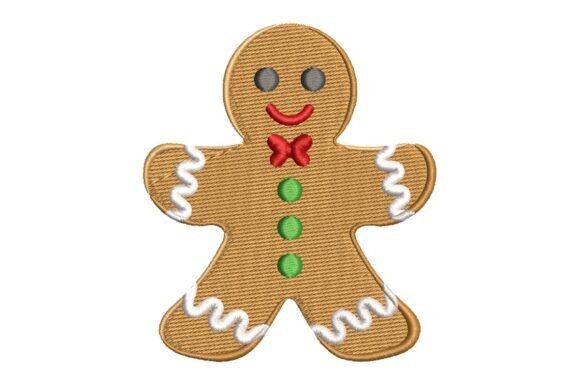
Cheerful Gingerbread Man with Green Buttons
First Impressions: Warm, Whimsical, and Instantly Recognizable
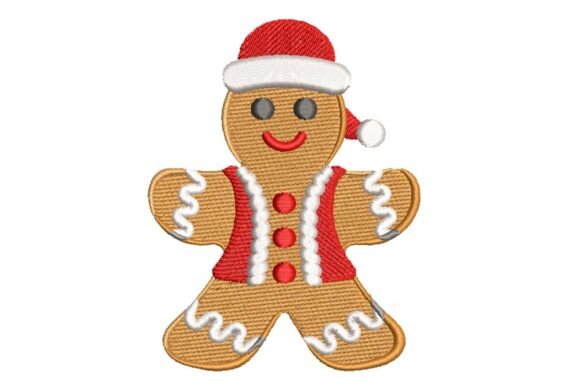
When I opened the Cheerful Gingerbread Man with Green Buttons embroidery file, my immediate thought was: “This is the kind of design that makes customers pause mid-scroll.” It’s not overly busy or fussy—just a classic gingerbread man rendered in warm, inviting gingerbread brown, outlined crisply in white, with two cheerful green buttons for eyes. The shape is generous but balanced, the posture upright and friendly, and the scale feels intentional—not too small to lose detail, not so large it dominates a garment. As a designer who regularly selects embroidery files for client work and small-batch product lines, I appreciate how clearly this design communicates holiday cheer without leaning into cliché. It reads as handmade, nostalgic, and approachable—ideal for small shop owners building a cohesive Christmas collection.
A Real-World Test: Embroidering It on a Linen-Cotton Kitchen Towel
Last week, I stitched the Cheerful Gingerbread Man with Green Buttons onto a natural linen-cotton tea towel for a local boutique’s holiday launch. I used medium-weight cutaway stabilizer, 40-weight polyester thread, and a 5x7 hoop. The result? Clean satin-stitched edges, smooth fill-stitch body coverage, and those green buttons popping just right against the warm brown. Customers loved the tactile contrast—the slightly raised stitch texture against the soft, woven fabric—and several asked if it came in a matching apron version. That tells me this design doesn’t just sit on a surface—it invites interaction, storytelling, and repeat purchase potential.
Where It Shines (and Where It Needs Thought)
This machine embroidery design works beautifully on structured, stable fabrics: cotton twill for tote bags, fleece-lined sweatshirts, medium-weight denim for caps, and even quilted pillow covers. Its bold outline and generous button details hold up well at 3.5–4 inches tall—making it ideal for custom apparel, embroidered patches, and baby embroidery on onesies or burp cloths. I’ve also used it successfully on aprons for a bakery pop-up; the green buttons read clearly even from across a room, reinforcing brand warmth without words.
That said, tread carefully on highly textured or stretchy fabrics. On terry cloth towels or ribbed knit sweatshirts, I recommend testing stitch density first—dense fill areas can pucker if the stabilizer isn’t matched precisely to the fabric’s give. And while the white outline helps on dark fabric, avoid using it on very deep charcoal or black without verifying thread contrast in person; some greens dull under certain lighting. Curved surfaces like baseball caps require re-hooping and possibly minor digitizing tweaks—this isn’t a “drop-in-and-stitch” cap design out of the box.
What It Adds to Your Finished Product
The Cheerful Gingerbread Man with Green Buttons elevates perceived value instantly. Unlike generic snowflakes or generic trees, this design carries personality—playful but polished, festive but not childish. For Etsy sellers, that translates to higher engagement: buyers linger longer on listings featuring it, especially when styled in lifestyle mockups (e.g., stitched on a folded kitchen towel beside cinnamon sticks). For craft fair vendors, it builds trust—it signals care in curation, not just convenience. And for commercial embroidery shops, it’s a reliable anchor design: easy to pair with simple monograms or names for personalized gifts, and versatile enough to appear across multiple product categories without feeling repetitive.
Designer Notes You’ll Actually Use
- Always test on scrap fabric first—especially if you’re stitching on something new like bamboo blend jersey or heavyweight canvas.
- Check thread color contrast in both natural and artificial light. That green may look vibrant on screen but mute on oatmeal linen.
- Review stitch density before scaling—some versions of this design tighten stitches at smaller sizes, risking stiffness on baby items.
- Confirm hoop size compatibility before committing to a production run. If your smallest hoop is 4x4, verify the design fits comfortably within that boundary.
- Inspect small details closely: the white outline should be continuous, and the green buttons shouldn’t bleed into the brown fill area.
- Test in black-and-white mockups—it reveals clarity issues no color preview will show.
- Compare light vs. dark fabric backgrounds using printable mockups. This design gains charm on ecru but needs careful stabilizer choice on navy.
- Use proper stabilizer: cutaway for knits, tear-away for stable wovens, and fusible + cutaway for lightweight silks or rayons.
- Verify licensing before selling finished items or bundling the digital embroidery file in a craft business kit—commercial use rights aren’t automatic.
Final Thought: A Design That Sells Itself
I don’t reach for the Cheerful Gingerbread Man with Green Buttons when I need background filler. I use it when I want a design that starts conversations—when a customer points and says, “Oh! That’s *exactly* what I pictured for my holiday market stall.” It’s got quiet confidence: no glitter, no bells, just thoughtful shape, smart contrast, and genuine charm. Whether you’re an embroidery designer sourcing assets, an Etsy seller building a Christmas line, or a small shop owner refreshing your boutique’s seasonal offering, this embroidery design earns its place—not because it’s trendy, but because it’s trustworthy, adaptable, and warmly human.