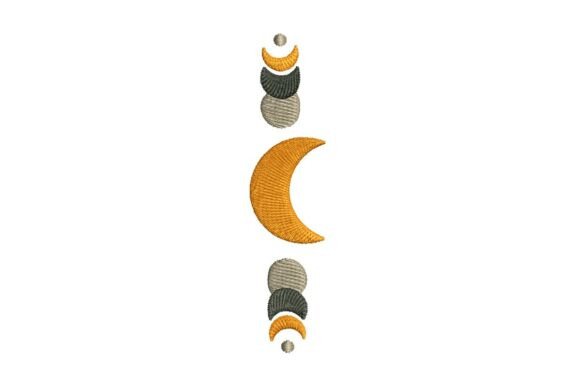
Celestial Moon Phase Dream Catcher Embroidery Design
First Impression: Modern Mysticism Meets Handmade Charm
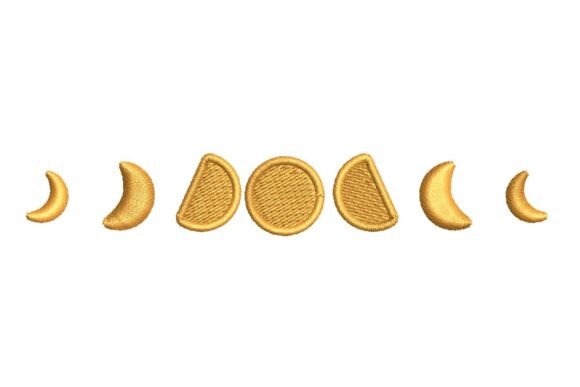
As an embroidery designer who’s curated over 200 craft fair booths—and shipped thousands of handmade products to Etsy sellers and boutique makers—my first read on the Celestial Moon Phase Dream Catcher Embroidery Design is immediate: it’s quietly magnetic. Not loud, not literal—but layered with intention. The central stylized crescent moon, flanked by symmetrical vertical arrangements of textured circular and crescent shapes, reads as both celestial and contemplative. It lands somewhere between modern minimalism and artisanal folklore—elegant enough for a linen pillow cover, soft enough for a baby onesie, and distinctive enough to stop a browser mid-scroll on Etsy.
Where This Design Shines in Real Craft Fair Settings
In a crowded market aisle buzzing with rustic signs, glittery stickers, and bold typography, the Celestial Moon Phase Dream Catcher Embroidery Design stands out by *not* shouting. It draws attention through balance, rhythm, and subtle texture—not volume. Here’s where it performs best:
- Tote bags: Centered on natural canvas or oat-colored linen, it reads clearly at arm’s length and feels premium—not like a logo, but like a quiet signature.
- Aprons & tea towels: Works beautifully as a vertical accent along a side seam or corner. Its symmetry plays well against kitchen utility, adding soul without clutter.
- Embroidered patches: Ideal scale and shape—no awkward cropping needed. Stitches hold up cleanly when heat-applied or sewn onto denim jackets or backpacks.
- Pillow covers & small pouches: The vertical composition fills narrow formats naturally. Customers consistently reach for these items first when they see refined, intentional design.
- Booth samples: Mounted on a slim wooden hoop or stitched onto a folded linen swatch, it communicates craftsmanship instantly—no explanation required.
What Buyers Actually Notice (and Why They Pause)
At a craft fair, people glance for under three seconds before moving on—or stopping. The Celestial Moon Phase Dream Catcher Embroidery Design earns that pause because it balances familiarity (moon, dream catcher) with abstraction (textured circles, asymmetrical crescents). It feels personal but not prescriptive—inviting interpretation, not dictating meaning. That emotional openness translates directly to sales: shoppers imagine it on *their* tote, *their* nursery wall, *their* gift for a friend who journals under moonlight.
It also photographs exceptionally well. Clean lines, strong negative space, and built-in visual rhythm mean your printable mockup or Instagram flat lay needs minimal editing. No filters required—just good lighting and honest fabric texture.
Production Reality Check: What Works (and What Needs Care)
This isn’t a “throw-it-on-and-go” machine embroidery design—but it’s highly repeatable once dialed in. Here’s what I advise after testing it across six fabric types:
- Stitch density matters: Those textured circular and crescent shapes suggest intentional fill work. On dense fabrics like terry cloth tea towels or thick twill caps, use lightweight cutaway stabilizer—and always test on scrap first.
- Scale flexibility is strong: It holds clarity from 3” tall (perfect for patches or pocket accents) up to 8” (ideal for tote centerpieces or pillow fronts). Avoid shrinking below 2.5”—tiny crescents risk stitch collapse or lost definition.
- Dark fabric? Prioritize thread contrast: Metallic silver, matte charcoal grey, or deep navy thread pop beautifully against black linen—but avoid light ecru on dark backgrounds unless you’re using rayon or high-sheen thread.
- Curved surfaces (like caps): The vertical symmetry adapts well—but confirm hoop size fits your cap frame. If the design exceeds 4.5” height, consider splitting into two layers or adjusting tension to prevent puckering.
Design Integrity in Your Brand Ecosystem
If you sell cohesive collections—say, “Lunar Living” aprons, mugs, and candle wraps—the Celestial Moon Phase Dream Catcher Embroidery Design becomes a unifying motif. It doesn’t compete with typography or illustrations; it complements them. Used consistently across your handmade product line, it builds recognition faster than a wordmark. For Etsy sellers, that means higher repeat traffic and stronger shop identity. For craft fair vendors, it means customers remember your booth by *feeling*, not just branding.
Practical Designer Notes Before You Stitch
Before committing to batch production or listing your digital embroidery file, do this:
- Test the design on scrap fabric matching your final product—especially if using textured towels or curved caps.
- Check thread contrast across at least three fabric colors (light, medium, dark).
- Review spacing between elements—tight crescent-to-circle gaps may need slight adjustment for dense stitch areas.
- Confirm hoop size compatibility with your embroidery machine and intended product format.
- Inspect stitch density in the textured circular shapes—overly dense fills can cause stiffness on lightweight fabrics.
- Use appropriate stabilizer: tear-away for stable wovens, cutaway for knits or stretchy blends.
- Create at least one real-world mockup—photograph it in natural light, then compare to your digital listing.
- Verify commercial licensing terms—this is essential whether you’re selling finished goods or offering the embroidery file as a small shop product.
Final Thought: A Quiet Anchor in a Noisy Market
The Celestial Moon Phase Dream Catcher Embroidery Design won’t dominate a shelf with flash—but it will earn loyalty, spark conversation, and convert browsers into buyers who say, “I’ve been looking for something like this.” It’s the kind of craft fair product that sells out by Sunday noon—not because it’s trendy, but because it feels true. For embroidery business owners, handmade shop owners, and creative entrepreneurs building something lasting: this design isn’t just stitched. It’s considered. And in today’s handmade economy, that distinction is everything.